
The Future of AI Voice Technology in Business Communication
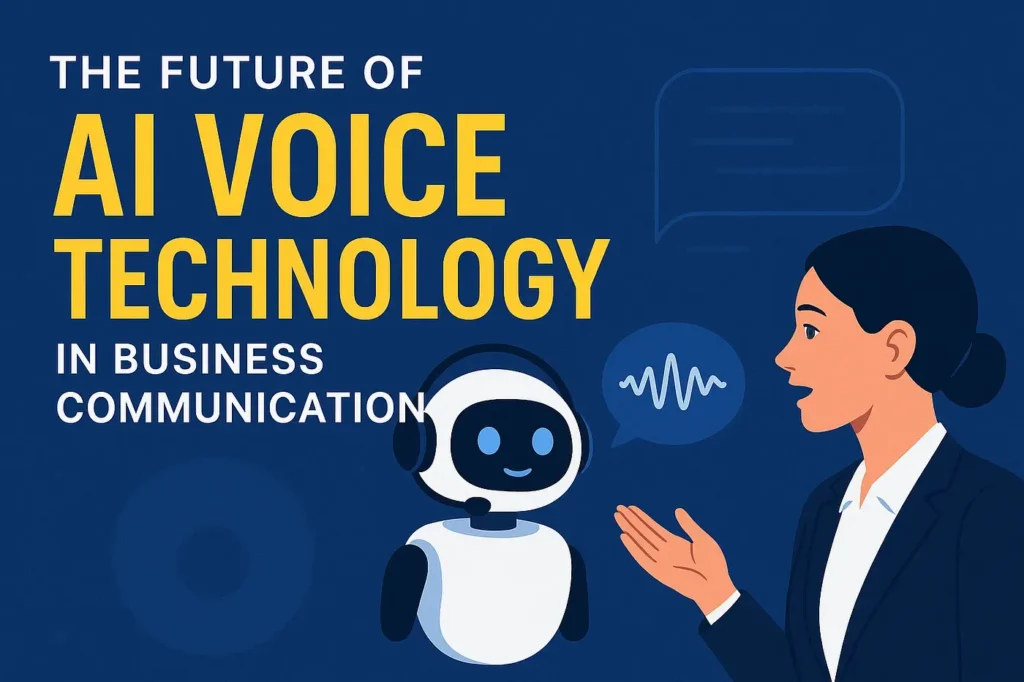
AI voice technology, driven by rapid advances in speech recognition, natural language processing (NLP), and text-to-speech (TTS), is reshaping how companies interact with customers, partners, and even their own teams. At the heart of this evolution are AI voice bots — intelligent agents capable of holding real conversations, solving problems, and delivering information in real-time.
We’re entering an era where talking to a business will be as seamless as talking to a friend.
Why Voice Is the Next Big Leap in Business Communication
While chatbots have dominated the customer service scene for years, text-based systems often feel mechanical and impersonal. Voice changes that. Humans are wired for vocal communication — it’s faster, more intuitive, and carries emotional cues.
Business Use Cases Thriving with Voice Bots
- Customer Service Automation
- Outbound Sales & Marketing
- Internal Communication & HR
- Healthcare & Appointments
- Banking & Payments

Challenges and the Road Ahead
While the potential is enormous, adoption comes with challenges:
- Accuracy in Noisy Environments — Background noise can still disrupt calls.
- Regulatory Compliance — Voice data is sensitive and must be secured.
- Human Oversight — Some situations require empathy that AI still struggles to replicate.
Yet, as voice cloning, emotion detection, and real-time translation mature, these gaps are closing fast.
Conclusion: Speak the Language of the Future
Businesses that embrace AI voice technology today will hold a major competitive advantage tomorrow. Voice bots don’t just automate — they humanize digital interactions at scale.
In a world where speed, personalization, and convenience define success, your brand’s voice might just be your most powerful asset.