

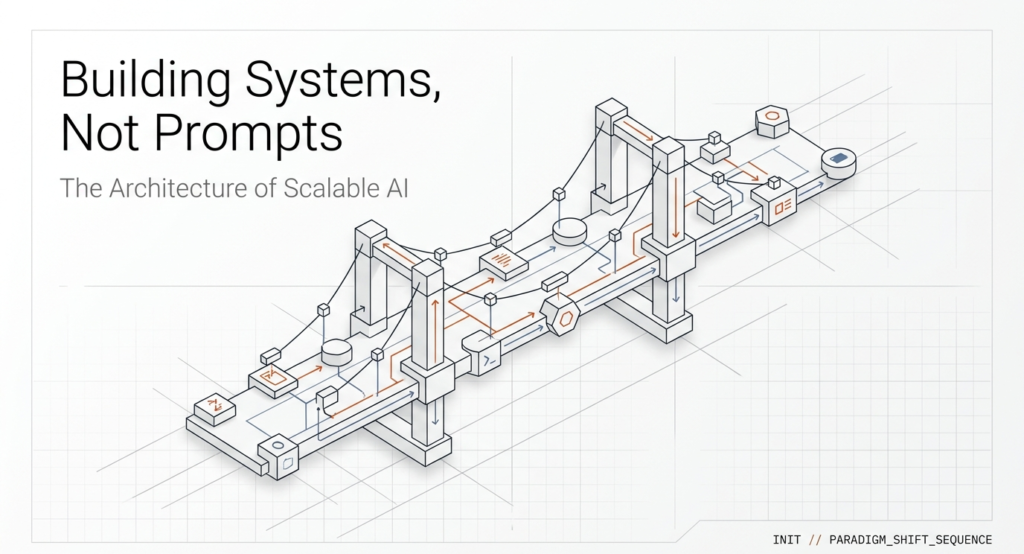
I Stopped Playing With AI and Started Building Systems

Kurt Rainier Sacay
Aspiring Cloud Engineer | AI Implementation Enthusiast | Full Stack Web Developer | Tech Innovator
Written by Kurt Rainier Sacay, Aspiring Cloud Engineer | AI Implementation Enthusiast | Full Stack Web Developer | Tech Innovator
Special Section: Infographics, Video, & Audio Learning Guide that summarizes this Newsletter Article for Busy Professionals
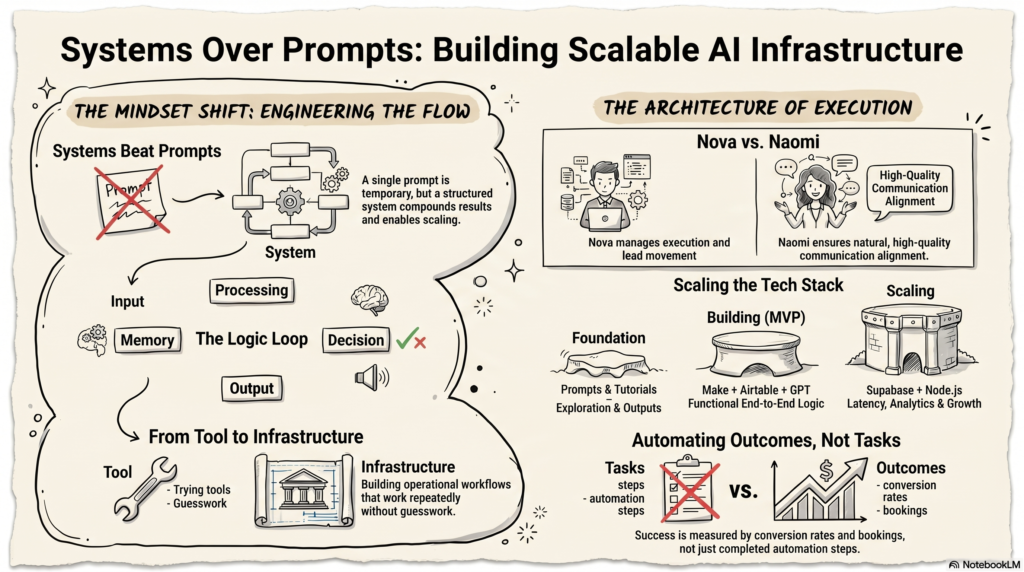
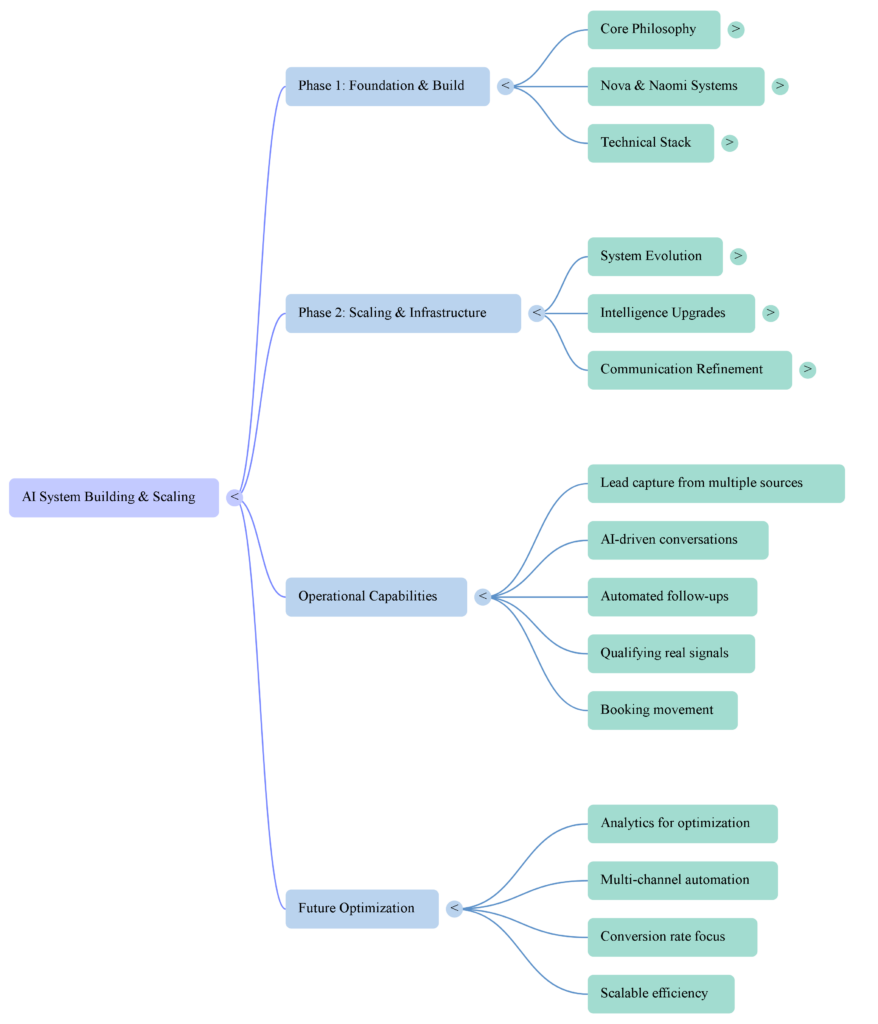
🔊Listen to the Strategy Podcast
🎥Watch the Executive Briefing (Video)
Origin of the Journey
I started where most people do—testing prompts, exploring tools, pushing AI to see what it can do.
At first, it looked powerful.
Then reality hit:
- Outputs were inconsistent
- Prompts broke easily
- Results couldn’t scale
That’s when the real problem became obvious:
I wasn’t building systems. I was just using tools.
So I made a shift most people avoid:
From prompting → to system design
Building Phase
I didn’t learn AI by watching tutorials. I learned by building systems that fail in real use.
Early setups were messy:
- Random prompts
- No memory
- No logic
- No structure
Sometimes it worked. Most times it didn’t.
The turning point?
I stopped treating AI like a generator—and started treating it like infrastructure.
Core System Architecture
Every working AI system I built follows this:
- Input – user data / lead / trigger
- Processing – AI reasoning + transformation
- Decision Layer – logic-based actions
- Output – structured response (JSON, text, action)
- Memory – stored context + history
- Follow-up – automation + continuation
Once this was in place:
Outputs became predictable. Systems became usable.
Development of Nova & Naomi (AI System Design)
Most AI setups fail in real conversations.
They:
- Sound robotic
- Lose context
- Fail under pressure
- Don’t convert into results
So I built two systems with clear roles and logic separation:
Nova (Execution System)
- Lead handling
- Conversation progression
- Booking flow
- Decision-based responses
Naomi (Communication System)
- Natural language refinement
- Tone control
- Clarity and intent alignment
- Human-like responses
System Design Principles (SEO + LLMO Boost)
These aren’t assistants. These are engineered systems:
- Defined roles
- Structured prompting frameworks
- JSON-based outputs
- Multi-layer decision logic
- Memory tracking
- Real-world testing
This is where most people stop. This is where I started.
What Has Been Completed
This is no longer experimental. It’s operational.
System Capabilities
- Multi-channel lead capture
- Data processing and enrichment
- AI-driven conversations
- Lead qualification (behavior-based)
- Automated booking flow
- Smart follow-up system
Technical Build
- Structured prompt architecture (engineered, not guessed)
- Workflow automation using Make
- AI conversation engine with decision logic
- Lead scoring system
- Behavior-triggered follow-ups
Use of Prometheus (AI Prompt Engineering System)
Before:
- Prompting was inconsistent
- Outputs varied
After using Prometheus:
- Prompts became structured
- Outputs became reliable
- Systems became testable
What I Use It For:
- Designing system-level prompts
- Improving output clarity
- Decision logic refinement
- Stress-testing AI flows
This is where prompting becomes engineering.
Current Position (AI as Infrastructure)
I don’t see AI as a tool anymore.
I see it as infrastructure.
Current Focus Areas:
- Scalable AI systems
- Workflow automation
- Execution pipelines
- Output consistency
I’m no longer experimenting.
I’m building systems that work repeatedly under real conditions.
Key Insights
1. Systems > Prompts A single prompt is temporary. A system compounds results.
2. Execution > Knowledge You don’t understand AI by studying it. You understand it by building systems that fail—and fixing them.
3. AI Without Structure Fails in Production. Real-world usage exposes weak setups instantly.
Completed:
- Nova (AI execution system)
- Naomi (AI communication system)
- AI conversation engine (structured outputs)
- Lead → Conversation → Booking → Follow-up pipeline
- Workflow automation (Make)
- Structured prompting system (Prometheus)
In Progress:
- Memory optimization
- Context awareness improvement
- Conversation quality refinement
- Lead qualification logic enhancement
Next Steps:
- Scale system capabilities
- Improve efficiency under load
- Optimize real-world performance
Let’s Connect
If you’re:
- Building AI systems
- Running lead generation workflows
- Scaling automation
I’m open to connecting and collaborating.
✅ Cybersecurity trends
✅ AI transformation
✅ IT strategy for Banking, Financial Services, and Healthcare